

The market on a plate: A recipe for traditional Zagreb bučnica (squash and fresh cheese strudel)
In Zagreb, many good stories begin at the market. It is where the search for the best ingredients starts, where recipes are exchanged and where families often decide what will be on the table that day.
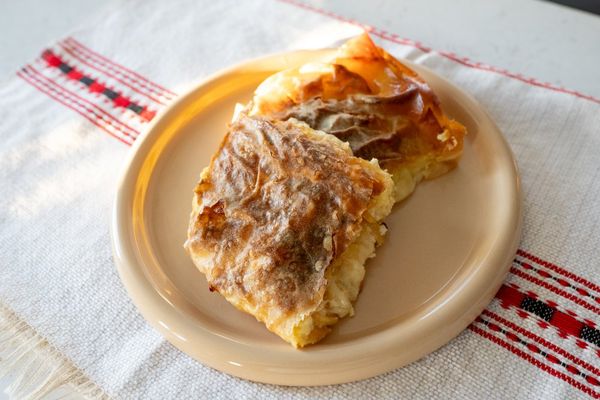
In the episode “The market on a plate,” I prepared bučnica – a simple, seasonal squash and fresh cheese strudel that evokes Dolac, its traditional women vendors known as kumice, fresh cheese and the aromas of home cooking.
When I want to experience Zagreb beyond grand descriptions and tourist postcards, I head to the market. At Dolac, you discover the city not just through its architecture, but also through what people buy. Some are looking for the best squash, others for fresh cheese or farm-fresh eggs, while some simply want to chat with a vendor they have known for years.
The market is one of the city’s oldest places for people to come together. People do more than buy groceries there. They ask after one another’s health, comment on the weather, plan lunch and exchange tips. I have often felt that the best recipes are found not in cookbooks, but in brief conversations at a stall selling fresh cheese and cream.
That made bučnica a natural choice for this episode. It is seasonal, simple and directly connected to what we can find at Zagreb’s markets. It does not take many ingredients, but their quality matters. The squash should be firm and fragrant, the cheese fresh and the pastry sheets thin enough to bake into a crisp, golden crust.
The filling is the most important part of bučnica. The squash needs to be grated, salted and thoroughly drained. If we skip this step, the filling will be too watery and the pastry will not stay crisp. The squash is then combined with fresh cheese, sour cream and eggs. The result is a creamy, slightly sweet mixture that becomes a true taste of fall in the oven.
Bučnica recipe
Ingredients for one large baking pan:
- 500 g phyllo dough
- 1 kg grated squash
- 500 g fresh cheese
- 200 ml sour cream
- 2 eggs
- Salt
- 100 g melted butter for brushing
Preparation:
- Peel the squash, remove the seeds and grate it. Sprinkle with salt and let stand for 20 minutes to release the excess liquid. Then squeeze it out thoroughly with your hands or using a clean kitchen towel.
- In a bowl, combine the drained squash, fresh cheese, sour cream and eggs. Add the oil and, if needed, two tablespoons of semolina. The semolina will absorb excess moisture and help the filling hold together. Mix thoroughly and taste to see whether it needs more salt.
- Lay out one sheet of phyllo and brush it lightly with oil or melted butter. Place a second sheet on top and spread some of the filling over it. Roll into a strudel and place in a greased baking pan. Repeat with the remaining pastry and filling.
- Brush the strudels with oil or butter and bake in an oven preheated to 375°F (190°C) for about 40 minutes. Toward the end, you can increase the temperature to 400°F (200°C) to make the crust even crisper.
- Let the finished bučnica cool for a few minutes before slicing. Serve with sour cream, yogurt or a glass of homemade juice.
DID YOU KNOW?
The decision to build the city’s central market at Dolac was made in 1928, and the market was completed and officially opened in 1930. Some of the old houses and streets on the site were removed to make way for it. Dolac thus became a symbol of the city’s modernization while preserving what mattered most – bringing producers, vendors and residents together.
Dolac is also home to a statue of a kumica, a traditional woman market vendor, erected in 2006. It honors all the women who brought food to Zagreb for decades and became one of the most recognizable symbols of its markets.
When I make bučnica, I feel as though I am doing more than preparing a single dish. I am bringing a whole scene from city life into the kitchen: a morning at Dolac, baskets filled to the brim, conversations at the stalls and a table where everyone will gather afterward. Because the market is more than a place to buy food. It is where people begin to connect.
Author: Toni Janjiš